Thursday, January 17, 2013

Finally, From Humble Beginnings: Union Stations in America

So I am finally putting up one of my projects form last semester, a timeline for my Modern Architecture class. The assignment sounds simple enough, choose a topic that covers the time period of the class (1870-1930) and create a graphic timeline with 20 entries. Each entry must be 100-200 words long, with 5 "longer focus" entries of 300-500 words each. Sounds easy enough, right? Right? WRONG!!

This project not only required the research of 20 different train stations (my topic of choice), but required countless hours in design. Call me an overachiever, but I created 2 documents, a graphic timeline and a text timeline. But I am really excited by how well they turned out and I am awaiting comments from my professor. Hopefully she loves it as much as I do.

Here is my introduction to the project and my choice of topic:

100 Years of the Train Station as a Building Type in America
 
In his book about the history of train stations, Carroll Meeks quotes Building News,1875 in saying, “Railroad termini...are to the 19th century what monasteries and cathedrals were to the thirteenth century. They are truly the only real representative building we possess...Our metropolitan termini have been leaders of the art and spirit of our time” (Meeks, iii). Had this book been written today, it would have also compared railroad stations to the airports of the 20th century. Railroad stations are a very interesting study because they were not around before railroads were invented. Prior to 1800, there were no train stations. But as the railroad grew in importance, so did the railroad station, combining the utility of a transportation building with the form and ornamentation that dominated the decades.
In order to keep this project to a manageable size and detail level, it is limited to train stations in America, focusing on the union station building type. Not all of the entries focus on union stations, but the majority of them do. Why union stations? Because these buildings, unlike company stations, were dictated by the need for efficient passenger movement. In other words, while railroad companies each had their own standards for their stations and all buildings along their routes followed these standards, union stations were collaborations between several companies servicing a city. Therefore, the building plan and decor was a compromise between the companies. They highlight the larger design movements taking hold the world over, such as neoclassicism and the City Beautiful movement. Their decor evolved from Victorian to Romanesque to Beaux-art classicism to art deco. The plan of these structures evolved from a single room to massive complexes with spaces for waiting, boarding, and departing trains. Traffic was separated based on where it was going and by pedestrian and car traffic. These were all design features that architects in the early 19th century could have never imagined.
From 1830 to 1940, America saw the rise and end of the great railroad station. After WWII, train traffic slowed as air travel increased in popularity. Thus, in just over 100 years time, this building type began, grew, evolved, found itself, and ultimately ended. These written entries and the accompanying graphic time line attempt to do this process justice, by examining just how far the train station evolved in such a short amount of time, perhaps more than any other building type ever has. These were the gateways to our great cities. People from all over the country and all over the world entered the city through the station. They were the first impression and last impression cities left on travelers and tourists. While America did lag behind Europe, by the turn of the century, these structures were impressive. Grand Central Terminal, Kansas City Union Station, Penn Station, and others became cathedrals to travel, much as the skyscraper had become cathedrals of commerce. All that was American architecture was embodied in these buildings, and that is why the American union station is such an important part of American architecture.
Not one single element, facade treatment, layout, use of train shed, or style, dominates this time line. Rather, much like the evolution of the station type itself, it focuses on a combination of these factors, and how their combination, change, and experimentation led to the design and construction of some of the most grand stations in the world. Beginning in 1830 with a single room brick structure, the railroads began their dominance over the American landscape. From humble beginnings, the train station building type was born.
Graphic Timeline


P.S.- I welcome comments. What do you think? What should I do differently next time? Want more information? Let me know, and I'll tell you what I know, or send you to the place that knows.

Sunday, December 30, 2012

Stay Tuned...

Once I get my life a little more organized, I will post some of my projects from this semester, so stay tuned. I know I'm more excited about most of them than any of you are, but I will try to make them seem interesting. Coming soon...

Houston, America's Fourth Largest Suburb

This past week, my Gophers played in the Meineke Car Care Bowl of Texas. As field staff lead for the marching band, not only did I get free flights and a very nice hotel room (complete with king sized bed) to myself, I also got to see the city of Houston, Texas for the second time. The first time, I was at the NCFL (National Catholic Forensics League) tournament freshman year of high school. After my 5 semesters in college, I saw the city through a different light this time, and what an unpleasant city it is (I'm putting this very lightly as I don't want to insult any Houstonian as they are from Texas and their feelings get hurt very easily). It is basically a giant suburb with a downtown. And a majority of that suburb is dirty.

First of all, it took us over half an hour just to get from the airport to the hotel in downtown. The hotel was nice, and was right next to MinuteMaid Park. It also provided a nice view of downtown, which is a very generic American downtown. Houston lacks the unique skyline that makes NYC, Chicago, and other American cities instantly distinguishable. Most buildings are tall boxes, with a strip of lights around the top. Some glass buildings have chunks missing, unnecessarily, to make "architectural statements." The street life in Houston is virtually nonexistent  This could be because it was in the 40's the entire time we were there, and Texans aren't that tough in the cold weather. They are in the process of constructing street car lines, which is a great idea, but they are on streets that run between parking lots. It takes a full 15 minutes just to get out of downtown and onto a highway, which ring the area. In true flyover country fashion, all the freeway interchanges are flyovers, involving towering ramps seemingly built for no other reason than being tall and looking cool (remember, everything's bigger in Texas).

Once we got out of downtown, it was a full 45 minute drive to where we held our practices. Granted, this wasn't in Houston proper, the suburb of Houston just continues out into other suburbs. In good traffic, it takes as long to travel to this point in the metro as it takes to travel from my hometown to the edge of Kansas City, 60 miles away. It's insane.

Reliant Stadium, where the game took place, is not like most stadiums built recently, in that is away from downtown surrounded by parking lots. The stadium itself is a nice structure and impressive to behold. It's more famous neighbor, however, is not. The Houston Astrodome, one of the most innovative American sports facilities at the time of its construction, is sitting empty and decaying. It is such an eyesore next to the new, gleaming Reliant Stadium. It is a sorry sight, and a sign of our failure to maintain what we have. We are so quick to want the newest stadium, the newest features that we won't maintain what we have, even when it is an American landmark. Tell me you haven't heard about the Astrodome? Everyone in America has heard of the Astrodome (exaggeration), and they are essentially just waiting for it to collapse so they don't have to pay for demolition.

To finish my rant, Houston, and Texas as a whole, is a city and state I do not need to visit again. Their "we are better than you and we are gonna let you  know it" attitude leaves me with a bitter taste in my mouth. It doesn't help that the Gophers lost the game in a very tight fashion on a last second field goal or that Texas Tech's fans had zero class. But rest assured that I will use Houston in my future as what not to do. Seeing it first-hand, I don't know how 6 million people can live in a city like that. It makes me so happy to be living in Minneapolis, a city that has it right.

Sunday, December 9, 2012

St. Paul Union Depot and Its Mississippi River (Dis)connection

Since it is nearing finals week and I am swamped, I figured I would post this, since I already wrote it. This is a blog post for my Sustainability and Planning on the Great River class. It will be posted on the River Life blog at riverlife.umn.edu blog sometime, so you should check it out. It is actually a really great site and blog.

Headhouse of Union Depot.
"St. Paul has always been a river city. Its geography made it the perfect location for a steamboat landing, with its lower landing quickly becoming one of the busiest in the country (NPS). As railroads grew into the primary source of travel in the US, St. Paul grew into a railroad hub for the upper Midwest. In 1923, a shiny new depot opened just above the lower landing that cemented St. Paul’s place as a regional transit hub. However, construction of the station included elevating the tracks out of the reach of flood waters, thus severely limiting Lowertown’s physical connection to the river to a few underpasses. Just this year, the depot reopened after a $243million restoration (Minneapolis Star-Tribune), bringing the relic back her 1920’s beauty, but updating her in prep for becoming a 21st century transit hub. Soon, Union Depot will be the terminus of the Central Corridor light rail line, the cities’ Amtrak station, the end of a proposed high-speed train connecting to Chicago and beyond, as well as a center for bus transit in the region. Couple this with the vibrant Lowertown neighborhood and the new Saint’s ballpark expected to open in 2015 (Pioneer Press), and Union Depot will be the center of activity on the east side of downtown St. Paul. This provides an excellent opportunity for planners to reconnect St. Paul’s riverfront with Lowertown.

Lambert’s Landing, the site of St. Paul’s busy lower landing, sits quietly between the depot and the river. Currently, there is a fairly standard park along the bank. A running trail here, some trees there, covered in brown sod on pack ground; the most it inspired from me was a yawn. However, the development potential of the park itself is a topic for another blog post. The important feature of the park is the presence of the depot just beyond. The rear of the depot looks down upon the site, almost mocking it, reminding the landing of how railroads overtook travel by steamboat. While this visual connection is strong, there is absolutely no physical connection. To get from the station—and subsequently Lowertown—to the river, a person has to walk down Sibley Street and under a sketchy underpass. Then, they have to play frogger on a four lane road with freight traffic. Not fun. But the plan of the building provides the solution. While the head house (the main structure) is two blocks from the river the concourse actually bridges Kellogg Blvd and stops 200 feet from the water. This is where a connection to the park could be constructed. 
With inspiration from the redevelopment at Kansas City’s Union Station (http://www.bnim.com/work/freight-house-pedestrian-bridge), a pedestrian bridge can be constructed; one that connects the depot to the park across the tracks and Warner Road. This would be an opportunity to create an architecturally significant monument (one that architecture nerds like me geek out about) to match the monumentality of the depot. It would reestablish the city’s riverfront as a gateway to St. Paul, just as the station has become. It would also make the park a feature destination within the rejuvenated Lowertown neighborhood. With potential commuters and travelers from across the metro and even as far away as Chicago walking through the depot, they can be drawn to the river. A monumental station connected to a monumental river by a monumental bridge. It only seems appropriate.
So what can you do? Simple. Visit the depot. Try to get to Lambert’s Landing. Is it easy? If the answer is no, then there is an obvious problem. Problems need solutions, so a bridge would be just that. Also, while you are down there, visit restaurants, shop in local stores, and walk along the river and remember, everything in the cities connects to the river in some way, even Union Depot and its (dis)connection."

Lambert's Landing with Union Depot (arched roof) behind.


Sunday, December 2, 2012

I Can't Even Go To a Banquet

Tonight was the UMMB's annual banquet recognizing the end of the season and celebrating the achievements of the band and the individual members. We all get dressed up, eat delicious food, and watch a great slideshow of the season. Sounds like a relaxing evening, right? Wrong.

The banquet was held at The Depot, which is an upscale hotel complex with an indoor ice skating rink. The reason it's called The Depot is because it is a renovated train station. The ice skating rink, which they covered in boards and was where the banquet was held, was in the old train shed. So of course, with my current project on train stations, my architortured mind spend tonight torturing me. I examined every truss, noting that the shed was not a vaulted structure, but a simple triangular trussed shed. It was not very wide, probably only fitting 2 or 3 trains and platforms. A good chunk of the night was spent trying to find a reason for the very large pipes coming straight down into the center of the space with a funnel-like structure on the bottom. Probably for the ventilation of train smoke, but with a shed this narrow, if the edges were open, which I'm guessing they were, there shouldn't be need for a large vent system like that.

This is what I thought about through the awards ceremony and dinner. I really don't think you need any more evidence that architecture has forever ruined my peace-of-mind. Not that I mind.

Thursday, November 29, 2012

Everything You Ever Wanted to Know About Train Stations

As I sit here, watching the clock tick toward 12:30am, I wonder. I wonder if anyone else on this planet, or at least at the university, has ever written 8 pages and 4,088 words on union train stations in America from 1840-1940. I know the answer is probably no, but to make myself feel better about myself, I'm going to say yes. There is somebody on campus that will cry with me over the loss of Penn Station in New York, or cringe at the notion of St. Louis's Union Station as attempting a unified facade, or even freak out when the book I checked out of the library features a very detailed exterior elevation of Kansas City's very own Union Station. With them, I could have a very heated debate over which Twin City station was superior, Minneapolis's Great Northern Depot or St. Paul's Union Depot. We could even have Google map parties where we try to find these stations in relationship to the city centers without the help of the search feature.

In reality, I know no such person exists. It's a little lonely in my architortured mind, but it's okay. Someday, society will catch up to my superior level of brain function, and everyone will appreciate good architecture. Oh what a world that would be.

(I'm kidding. I promise I'm not this vain. Also, that would be a very scary world, if people could relate to me)

Tuesday, November 27, 2012

Resuscitation Attempt

So, I haven't posted since September. Boo me. But this is my attempt to revive my blog from the catacombs of laziness. Being in the middle of the final stretch to winter break, I don't have a lot of creativity left (and what was left was used to come up with the phrase 'catacombs of laziness') so this post is going to be mostly pictures I have taken throughout the semester for projects and the like. They are all from Minneapolis/St. Paul, so I guess you could say that this is my plug for the Twin Cities (see my earlier Kansas City plug). Here you go! Oo's and Ah's appreciated.


The following pictures are taken from Indian Mounds Park, on the Mississippi River bluffs above downtown St. Paul.


Downtown St. Paul

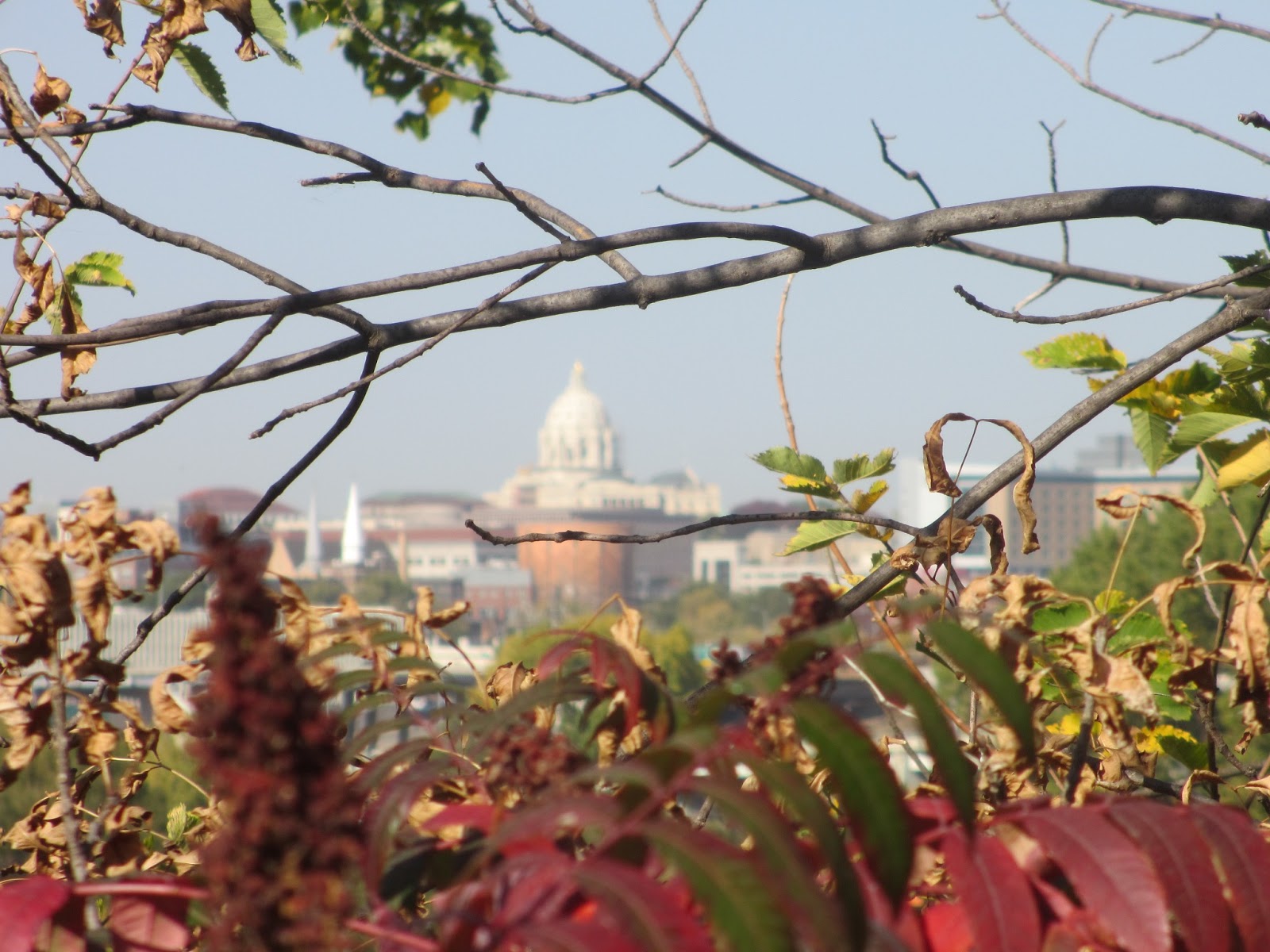
Minnesota State Capitol through the fall folliage

Architecture of the Earth
The next photos are from Lock and Dam No. 1, in the Mississippi River Gorge on the border of Minneapolis and St. Paul.

Tug boat leaves the lock heading upstream

Stairs to nowhere

Tour boat in the lock
The next three pictures (noticing a pattern here?) are from the Minneapolis Central Riverfront, where the Mississippi River runs through downtown and falls over St. Anthony Falls, the only natural waterfall along the entire length of the great river. I chose some lesser photographed views, because I didn't want to post something that everyone has seen before.

Grain Belt sign, red house boat, Hennepin Ave Bridge

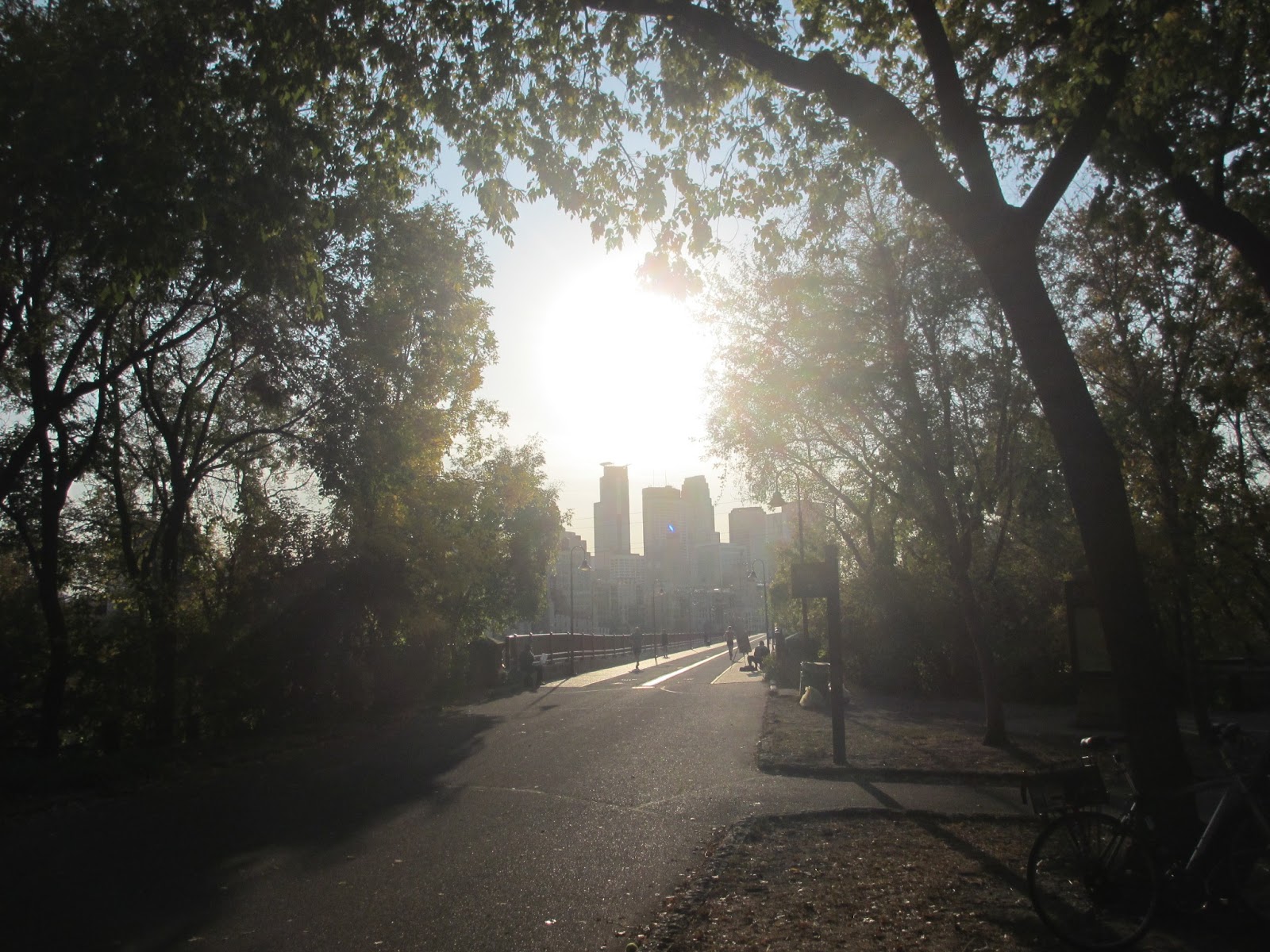
North end of the Stone Arch Bridge

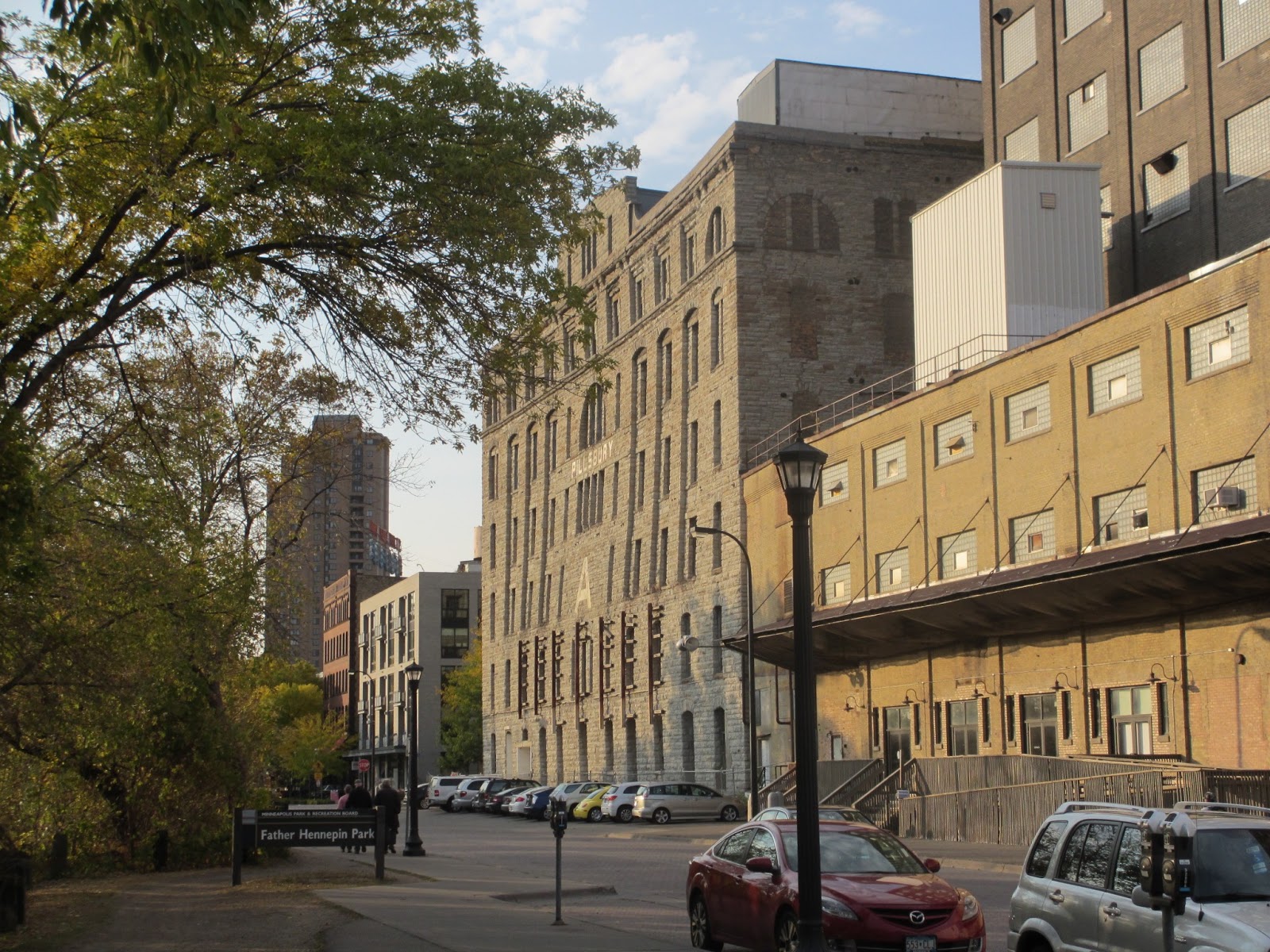
General Mills "A" Mill
The final set of pictures is from Lake Como, St. Paul. Sorry, I broke from the 3 picture pattern.

Lake Como in St. Paul

Historic Como Pavilion

Anybody lose a chair?

I love these old cottonwoods
Well, that's all for now. Hope this will get my butt in gear and I can fit some posts in before winter break, even if it is just my teardrops on the  keyboard. Gotta love architorture school.

Ciao for now!